
Written and directed by Alex Huston Fischer and Eleanor Wilson, Wicker is adapted from the short story The Wicker Husband by Ursula Wills-Jones.
The film premiered at the Sundance Film Festival in January 2026 and began its United States theatrical release on October 23, 2026.
Unlike conventional romantic comedies, Wicker doesn’t begin with two attractive strangers meeting under charming circumstances.
Instead, it introduces a lonely fisherwoman, a society obsessed with conformity, and a husband who is literally made from woven plant material.
The result is a premise that sounds ridiculous on paper but creates room for surprisingly thoughtful questions about relationships and belonging.
Here is why Wicker is one of the most unusual romantic films of 2026 and what audiences should know before watching it.
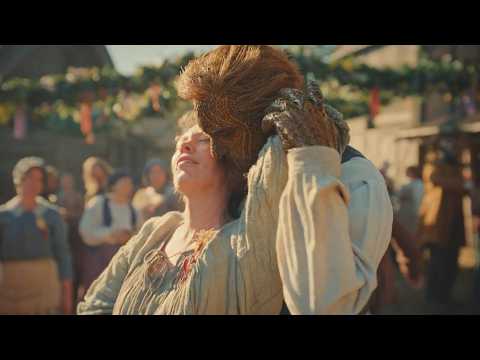
What Is Wicker (2026) About?
Wicker follows a fisherwoman living on the outskirts of a small coastal village.
She is unmarried, considered unpleasant by her neighbours, and frequently mocked by the people around her.
Her community appears more interested in judging her than understanding her.
Eventually, she grows tired of being treated as someone who doesn’t deserve companionship.
Rather than continuing to search for acceptance, she approaches a local basketmaker with an extraordinary request.
She wants him to create a husband from wicker.
What begins as a strange solution to loneliness develops into something the villagers never expected.
The wicker husband possesses qualities that challenge their assumptions about what a partner should be.
His presence brings affection and excitement into the fisherwoman’s life, but it also creates jealousy and fascination throughout the community.
As the relationship grows, the village becomes increasingly uncomfortable with the idea that someone it has rejected might have found genuine happiness.
The resulting conflict forms the foundation of a romantic fantasy that examines both the absurdity of social conventions and the human desire to be loved.
1. Wicker Has One of the Most Unusual Romantic Premises of 2026
Romantic movies often rely on familiar situations.
Two people meet unexpectedly, develop feelings for one another, encounter obstacles, and eventually decide whether their relationship is worth pursuing.
Wicker begins with a completely different question.
What happens when someone stops looking for a conventional partner and instead has one created specifically for them?
The concept immediately introduces possibilities that ordinary romantic comedies rarely explore.
Can a relationship be meaningful if one partner was made rather than born?
Does love depend on society recognising a couple as legitimate?
And what happens when the happiness of one person exposes the unhappiness of everyone around them?
These questions give Wicker an identity beyond its unusual visual concept.
The film’s premise may sound like a joke, but its implications are surprisingly relevant to real relationships.
2. Olivia Colman Plays a Character Who Refuses to Conform
Olivia Colman portrays the film’s central character, known as the Fisherwoman.
She is not introduced as the kind of glamorous romantic heroine audiences might expect.
Instead, she is someone who has spent years being judged for failing to meet her community’s expectations.
Her neighbours consider her undesirable, and their constant ridicule has shaped the way she experiences everyday life.
Yet the Fisherwoman refuses to accept that their opinions should determine her future.
Her decision to commission a wicker husband is strange, but it is also an act of independence.
She chooses to pursue companionship on her own terms rather than continuing to seek approval from people who have never treated her kindly.
Colman is particularly well suited to a role that requires both humour and emotional vulnerability.
Her performance gives the film an opportunity to make an absurd character concept feel recognisably human.
3. Alexander Skarsgård Becomes a Husband Made of Wicker
Alexander Skarsgård takes on one of the most unusual roles of his career as the Wicker Husband.
His character is a man constructed from woven material, yet he becomes the centre of a genuine romantic relationship.
The role presents an unusual challenge for an actor.
Skarsgård must communicate personality, affection, and emotional presence while appearing as a figure whose body is made from something completely unnatural.
According to reporting surrounding the film’s release, the production used an elaborate practical costume rather than relying entirely on computer-generated imagery.
The costume was developed with the involvement of Weta Workshop, requiring considerable attention to movement and physical detail.
That practical approach could help make the character feel tangible.
Rather than simply appearing as a digital fantasy creation, the Wicker Husband occupies the same physical spaces as the other characters.
His unusual appearance also reinforces one of the film’s central questions: why should someone’s outward form determine whether they deserve affection?
4. Peter Dinklage Plays an Important Role in the Unusual Romance
Peter Dinklage plays the local Basketmaker, the craftsman responsible for creating the Fisherwoman’s extraordinary husband.
His role is central to the film’s premise.
Without the Basketmaker, the relationship that disrupts the entire village would never exist.
The character also introduces an interesting contrast between practical craftsmanship and fantasy.
Basket weaving is an ordinary skill associated with everyday objects.
Wicker transforms that familiar craft into the foundation of something seemingly impossible.
That mixture of the ordinary and extraordinary is an important part of the film’s personality.
Dinklage’s presence also adds another experienced performer to an already distinctive ensemble.
5. The Movie Explores Loneliness Without Following a Typical Love Story
Loneliness is one of the central ideas behind Wicker.
The Fisherwoman lives near a community that refuses to accept her.
She is surrounded by people, yet she remains emotionally isolated.
That distinction matters.
Being lonely doesn’t always mean having nobody nearby. Sometimes, it means living among people who constantly make you feel unwanted.
The Fisherwoman’s decision to commission a husband can be understood as a response to that rejection.
She wants companionship, but she no longer trusts the social rules that have excluded her.
Through its fantasy premise, the film raises a familiar emotional question.
How much of our desire for love comes from wanting a meaningful connection, and how much comes from wanting society to stop treating us as incomplete?
Wicker approaches that question through comedy rather than conventional melodrama.
6. It Challenges Traditional Ideas About Marriage
Marriage is often presented in romantic films as the ultimate sign of a successful relationship.
Wicker appears more interested in questioning the assumptions behind that idea.
The village has strong expectations about how people should behave and whom they should marry.
When the Fisherwoman finds happiness through an unconventional relationship, those expectations begin to look less secure.
The wicker husband becomes a challenge to the community’s definition of a respectable partnership.
If a relationship is built on affection, kindness, and mutual appreciation, does it matter that it doesn’t resemble everyone else’s?
The film uses an impossible situation to explore a recognisable social conflict.
People often judge relationships that differ from their own, even when those relationships do not directly affect them.
Wicker turns that tendency into the source of both comedy and tension.
7. The Village’s Reaction Could Be Just as Interesting as the Romance
One of the most intriguing parts of Wicker is the way the surrounding community responds to the Fisherwoman’s new relationship.
At first, the villagers treat her as someone who should be embarrassed by her circumstances.
But when her wicker husband turns out to be unexpectedly remarkable, their attitudes begin to change.
Curiosity gives way to fascination, jealousy, and resentment.
That reversal exposes the contradictions in the community’s behaviour.
The same people who previously mocked the Fisherwoman become uncomfortable when she finds something they may secretly want for themselves.
This creates opportunities for social satire.
Rather than portraying the villagers as simply cruel, the film can examine how envy and insecurity influence people’s treatment of others.
The romance becomes a mirror reflecting the weaknesses of the society around it.
8. Wicker Combines Fantasy, Romance, and Dark Comedy
Wicker is not easily confined to one genre.
Its central relationship belongs to fantasy, its emotional questions belong to romance, and its social conflicts provide material for comedy.
That combination makes the film difficult to predict.
Scenes involving a man made from wicker can be visually absurd, but the emotions surrounding him may be completely sincere.
The humour also comes from the contrast between an impossible event and a village determined to maintain its conventional rules.
This type of storytelling can be particularly effective when the filmmakers allow strange situations to unfold without constantly explaining why they are funny.
However, the film’s unusual tone may not appeal to everyone.
Viewers who prefer realistic romantic dramas or straightforward comedies may find the concept too eccentric.
For audiences interested in unconventional storytelling, that eccentricity is precisely the attraction.
9. The Practical Design of the Wicker Husband Makes the Fantasy More Tangible
The appearance of the Wicker Husband is one of the film’s defining visual ideas.
Rather than depicting a conventional human character with a few unusual features, the production creates a figure whose body resembles woven plant material.
The practical costume approach gives the character a distinctive physical presence.
Its textures, movements, and limitations can contribute to the audience’s understanding of him.
That matters because fantasy characters become more convincing when they appear to interact naturally with the world around them.
A character made from wicker should feel different from a human being, even when expressing recognisably human emotions.
The design also serves the story’s themes.
The Wicker Husband’s appearance is impossible to ignore, making the villagers’ reactions a visible expression of their discomfort with difference.
10. The Film Is Adapted From an Unusual Short Story
Wicker is based on The Wicker Husband, a short story by Ursula Wills-Jones.
Its literary origins help explain the film’s fairy-tale-like premise.
Traditional fairy tales often use impossible events to explore ordinary human behaviour.
Characters may encounter magical objects, unusual transformations, or supernatural beings, but the stories frequently concern familiar emotions such as jealousy, greed, loneliness, and love.
Wicker follows a similar approach.
Its central fantasy is extraordinary, yet the reactions of the people around it are recognisable.
The adaptation also provides an opportunity to explore the original story’s themes through performance, production design, and visual comedy.
For viewers who enjoy films inspired by unusual literature, that background adds another layer of interest.
11. Its Festival Premiere Helped Introduce the Film to Audiences
Wicker had its world premiere at the 2026 Sundance Film Festival.
It was also included in the 2026 BFI London Film Festival programme.
These festival appearances helped introduce the film’s unusual concept before its wider theatrical release.
Festival recognition doesn’t guarantee that every audience will enjoy a movie.
However, it can give unconventional productions an opportunity to attract attention outside the marketing patterns of mainstream studio releases.
For Wicker, that visibility is particularly valuable.
A romantic comedy about a husband made from woven material is not the easiest concept to communicate through a conventional advertisement.
Its originality is easier to appreciate when audiences have the opportunity to discuss the story, performances, and themes in greater detail.
12. Wicker Could Appeal to Viewers Tired of Predictable Romance Movies
Many romantic comedies follow familiar patterns.
The characters meet, misunderstand each other, separate, and eventually discover what they truly want.
Wicker offers something different.
Its central relationship challenges the very idea of what a romantic partner is supposed to be.
Instead of relying entirely on misunderstandings between two ordinary people, the film uses fantasy to examine society’s expectations.
That makes it particularly interesting for viewers who enjoy stories that are strange without being emotionally empty.
The movie’s success ultimately depends on whether its characters remain engaging beyond the novelty of its premise.
But the combination of an unusual love story and a strong cast gives it a distinctive identity.
Wicker (2026) Cast and Characters
The film features a notable ensemble led by several internationally recognised performers.
- Olivia Colman as the Fisherwoman, an ostracised woman searching for companionship.
- Alexander Skarsgård as the Wicker Husband, an extraordinary partner created from woven material.
- Peter Dinklage as the Basketmaker, the craftsman who creates the husband.
- Elizabeth Debicki in a supporting role.
- Marli Siu in the supporting cast.
- Nabhaan Rizwan in the supporting cast.
- Richard E. Grant in the supporting cast.
When Is Wicker Coming to Cinemas?
Wicker began its United States theatrical release on October 23, 2026, with its wider rollout continuing afterward.
The film is scheduled for release in the United Kingdom on October 30, 2026.
Its Indian theatrical release is also scheduled for October 30, while an Australian release is planned for November 5, 2026.
Release dates may vary depending on the country, distributor, and cinema.
The film runs for approximately 105 minutes and carries an R rating in the United States for sexual content, language, and brief full nudity.
It is therefore intended for mature audiences rather than young children.
What Might Some Viewers Dislike About Wicker?
Wicker has a distinctive premise, but its unusual approach may also limit its appeal.
The Concept Is Deliberately Absurd
Some viewers may struggle to accept a romantic relationship involving a man constructed from wicker.
Enjoying the film requires a willingness to embrace its fairy-tale logic.
The Humour May Not Appeal to Everyone
Its mixture of dark comedy, fantasy, and social satire is different from the humour found in mainstream romantic comedies.
Viewers expecting constant light-hearted jokes may be surprised by its tone.
The Themes May Be More Important Than the Plot
Audiences primarily interested in fast-moving stories may find the film’s exploration of social expectations less appealing.
Its central attraction is the unusual relationship and the reactions it provokes.
It Is Not a Family-Friendly Fairy Tale
Despite its fantasy premise, Wicker includes mature content.
Its US R rating makes it more suitable for adult audiences.
Frequently Asked Questions About Wicker (2026)
What is Wicker (2026) about?
Wicker follows a lonely fisherwoman who commissions a local basketmaker to create a husband from wicker. Their unusual relationship creates jealousy, fascination, and conflict within her conservative village.
Who stars in Wicker?
The film stars Olivia Colman, Alexander Skarsgård, Peter Dinklage, and Elizabeth Debicki, alongside other supporting performers.
Who directed Wicker?
Wicker was written and directed by Alex Huston Fischer and Eleanor Wilson.
Is Wicker based on a book?
It is adapted from the short story The Wicker Husband by Ursula Wills-Jones.
When was Wicker released?
The film premiered at Sundance in January 2026 and began its US theatrical release on October 23, 2026. Other territories have different release dates.
Is Wicker a horror movie?
Wicker is primarily a fantasy romance and comedy. Although its premise may seem strange or unsettling, it is not principally marketed as a conventional horror film.
Is the Wicker Husband created using CGI?
The character’s appearance involves elaborate practical costume work, including contributions from Weta Workshop. Visual effects may still be used in the production, but the costume is a significant part of the character’s physical design.
Is Wicker suitable for children?
Wicker is rated R in the United States for sexual content, language, and brief full nudity. Parents should review local classification guidance before considering it for younger viewers.
Final Thoughts: Why Wicker Is One of 2026’s Most Unusual Romantic Movies
Wicker (2026) stands out because it takes an absurd romantic premise and uses it to explore familiar questions about loneliness, acceptance, marriage, and personal freedom.
The idea of a woman falling in love with a husband made from woven material sounds almost impossible to take seriously.
Yet the story becomes more interesting when viewed as a fantasy about someone who refuses to let society decide whether she deserves happiness.
Olivia Colman’s Fisherwoman challenges the expectations of her village, while Alexander Skarsgård’s extraordinary character forces the community to reconsider its assumptions about love.
Peter Dinklage and the supporting cast add further possibilities for humour and conflict.
The film’s unusual production design, literary origins, and mixture of comedy and romance make it different from more conventional releases.
That doesn’t mean it will appeal to everyone.
Its deliberately strange concept and mature humour may be too unconventional for viewers seeking a familiar love story.
However, for audiences interested in imaginative filmmaking and relationships that challenge social expectations, Wicker offers an intriguing alternative.
Ultimately, its most interesting question is not whether a man made from wicker can be a good husband.
It is whether people can accept a form of happiness that looks completely different from their own.




0 Comments
Share your perspective on this story. Keep the conversation thoughtful and respectful.