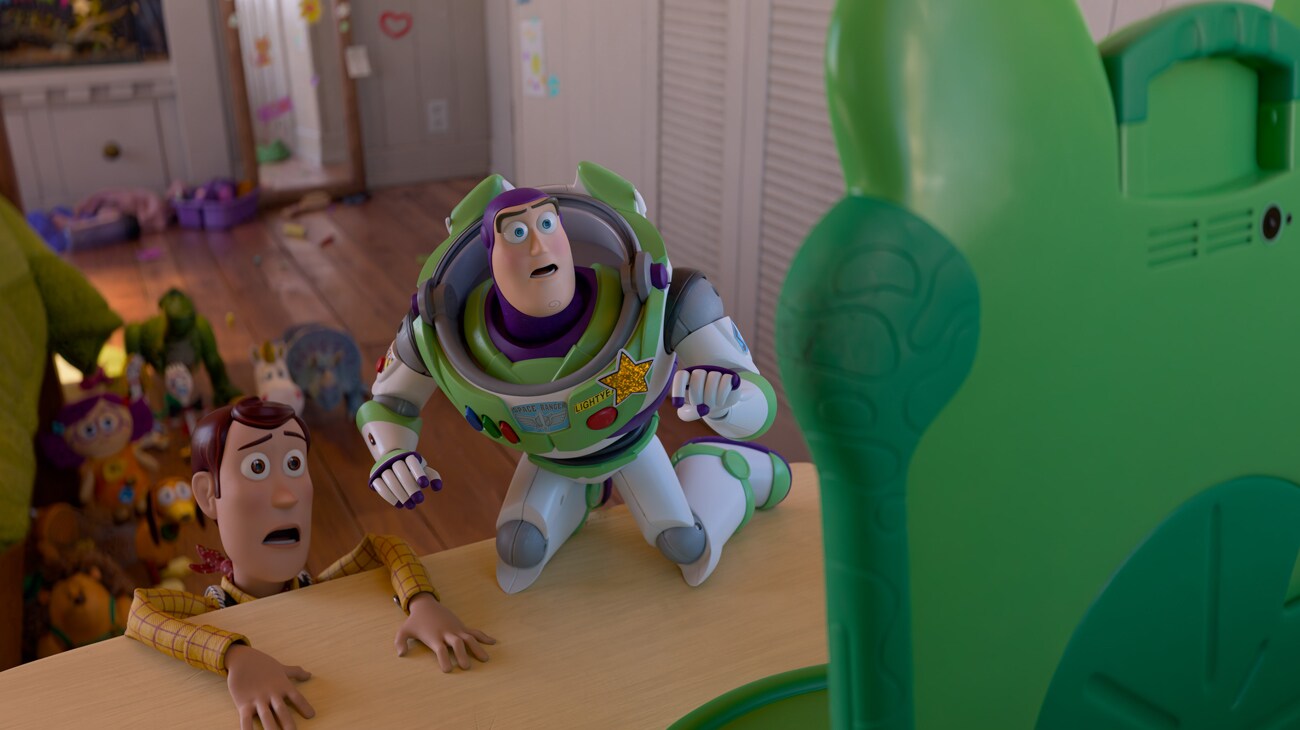
Rather than simply bringing Woody, Buzz Lightyear, and Jessie back for another adventure, Pixar introduces a problem that feels relevant to children growing up today: what happens to traditional toys when screens become more exciting than imaginative play?
Directed by Andrew Stanton and co-directed by Kenna Harris, Toy Story 5 follows Bonnie’s toys as they encounter Lilypad, a smart tablet that quickly becomes the centre of Bonnie’s attention.
For Jessie and the rest of the gang, this isn’t just another rival toy. It’s a challenge to the very reason they exist.
With returning characters, inventive animation, emotional storytelling, and a surprisingly timely theme, Toy Story 5 demonstrates why Pixar’s most famous franchise still has something meaningful to say.
The film also received a strong response from critics and audiences, suggesting that the fifth installment managed to overcome at least some of the doubts surrounding its existence.
But what exactly makes it stand out among animated movies released in 2026?
Here are fifteen reasons Toy Story 5 deserves consideration as one of the year’s best animated films, along with a few weaknesses that prevent it from being a completely flawless sequel.
1. Toy Story 5 Addresses a Problem Modern Families Understand
One of the strongest reasons Toy Story 5 feels relevant is its central conflict between traditional toys and modern technology.
In earlier films, Woody and his friends worried about being replaced, forgotten, donated, or abandoned as children grew older.
This time, their greatest challenge isn’t necessarily another action figure or stuffed animal.
It’s a tablet.
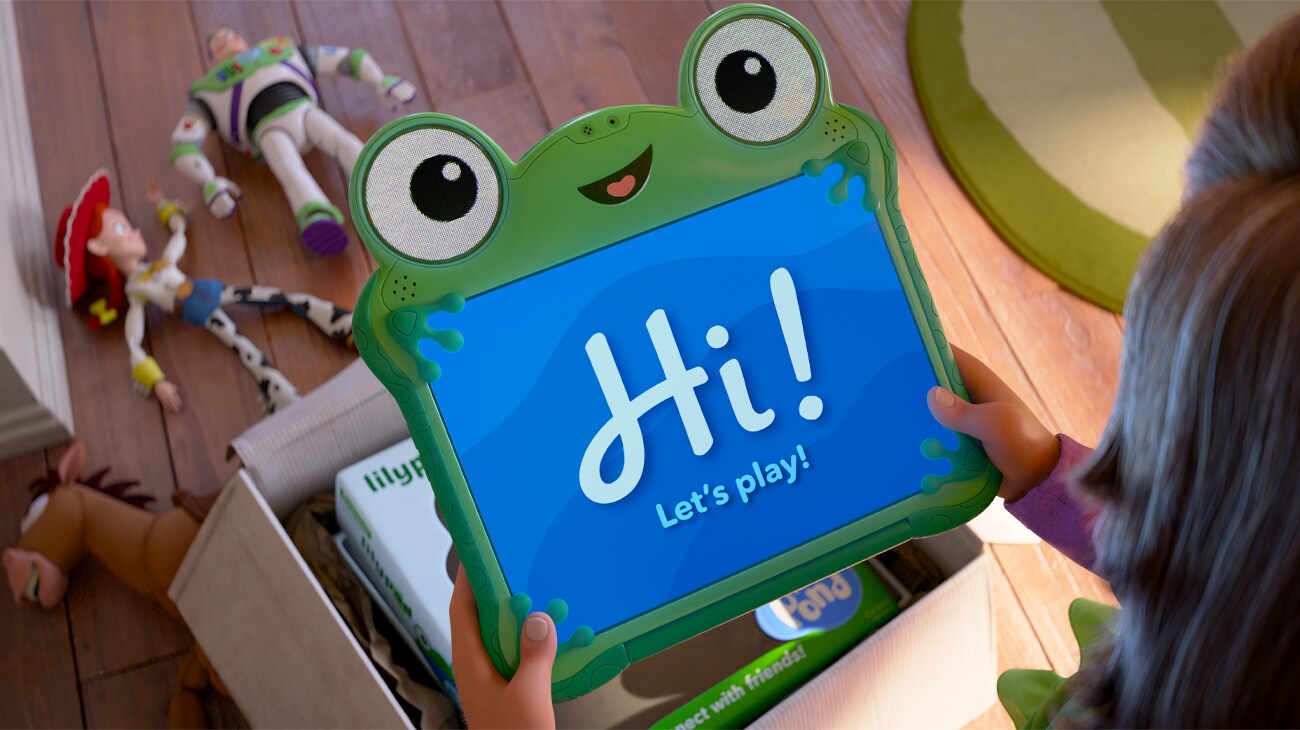
Bonnie becomes fascinated by Lilypad, a smart device that offers entertainment and new ways to communicate with other children.
For the toys, this creates an uncomfortable situation.
They were made to inspire imagination, companionship, and physical play. But how can they compete with a screen that offers seemingly endless possibilities?
This conflict reflects a familiar concern among parents.
Children today often encounter digital devices at a younger age, and families regularly debate how much screen time is appropriate.
Toy Story 5 turns that discussion into an entertaining adventure without needing to present every technological development as inherently harmful.
Its strongest idea is that technology can change childhood, but the value of imagination and human connection should not be forgotten.
2. Jessie Finally Gets More Attention
Jessie has been one of the franchise’s most memorable characters since Toy Story 2.
Her energetic personality, loyalty, and fear of abandonment made her more than a supporting character.
However, Woody and Buzz have traditionally received most of the attention.
Toy Story 5 gives Jessie a more prominent role as the leader of Bonnie’s toys.
She is responsible for helping the group navigate the challenges of a changing childhood.
When Lilypad arrives, Jessie must confront the possibility that Bonnie no longer needs her in the same way.
That conflict feels particularly appropriate for her character.
Jessie has already experienced the pain of being forgotten, so the possibility of losing another child’s affection carries emotional weight.
Her leadership also provides a refreshing change in the franchise’s character dynamics.
Instead of depending entirely on Woody to solve every problem, the story allows Jessie to take responsibility for the people around her.
That gives Toy Story 5 a different emotional perspective from its predecessors.
3. Woody and Buzz Lightyear Still Have Wonderful Chemistry
Few animated friendships are as recognisable as the relationship between Woody and Buzz Lightyear.
Since the original Toy Story in 1995, their personalities have complemented one another.
Woody is loyal, emotional, and sometimes anxious about change.
Buzz is confident, determined, and occasionally too serious about his own heroic identity.
Their differences have always been a source of comedy, but their friendship gives the franchise its emotional foundation.
After Woody’s decision to pursue a different life at the end of Toy Story 4, bringing the characters together again could easily have felt forced.
Instead, Toy Story 5 uses their reunion as an opportunity to explore how friendships can continue even when people’s circumstances change.
Tom Hanks and Tim Allen return to voice the characters, preserving the familiar personalities audiences have followed for decades.
Their chemistry remains one of the film’s greatest attractions.
4. Lilypad Is a Clever New Addition to the Franchise
Lilypad, voiced by Greta Lee, is one of the most interesting new characters introduced in Toy Story 5.
Unlike a conventional villain who simply wants to defeat the heroes, Lilypad represents a different understanding of what children need.
She believes technology can help Bonnie communicate, learn, and connect with the world around her.
From the perspective of Woody, Buzz, and Jessie, however, her arrival threatens the familiar world of playtime.
That contrast creates a more interesting conflict than a straightforward battle between good and evil.
Lilypad’s purpose is not entirely disconnected from the toys’ own mission.
Both sides want to help Bonnie.
The disagreement comes from how they believe that goal should be achieved.
By introducing a character with a competing philosophy rather than relying exclusively on malicious intentions, Pixar gives the story a more contemporary dimension.
5. The Story Understands That Childhood Keeps Changing
One of the reasons the Toy Story franchise has remained emotionally relevant is its understanding that childhood never stays the same.
Children grow older, develop new interests, and gradually move away from the things they once loved.
For the toys, these changes are difficult to accept.
Their identities are built around making children happy.
When a child stops playing with them, they begin questioning their purpose.
Toy Story 5 updates this familiar concern for a generation growing up with digital entertainment.
Bonnie isn’t simply losing interest in one particular toy.
She is discovering new ways to spend her time and connect with her peers.
That makes the film’s emotional conflict understandable to both children and adults.
Young viewers may recognise Bonnie’s excitement about technology, while parents may understand the toys’ fear that something important is disappearing.
6. Pixar’s Animation Remains Exceptionally Detailed
Pixar has always been known for technical innovation, and Toy Story 5 continues that tradition.
The film’s environments, character materials, lighting, and physical details create a world that feels familiar yet visually sophisticated.
Woody’s fabric clothing, Buzz’s plastic armour, and the textures of everyday objects help establish the differences between characters.
Those details are particularly important in a story about toys.
Every character should feel like an object that could exist in a real child’s bedroom.
At the same time, the animators must communicate expressions, emotions, and personality.
Toy Story 5 also explores Bonnie’s imagination through distinctive visual sequences inspired by handmade artwork and children’s creative activities.
That approach gives the movie opportunities to experiment beyond the realistic appearance of its ordinary environments.
The result reinforces Pixar’s ability to combine technical precision with artistic creativity.
7. It Offers Comedy for Children and Adults
A successful family film needs to entertain viewers with different ages and experiences.
Toy Story 5 benefits from the personalities established throughout the franchise.
Buzz’s serious attitude, Woody’s nervous determination, and Jessie’s energetic leadership provide opportunities for familiar character-based humour.
The new characters also introduce different comic styles.
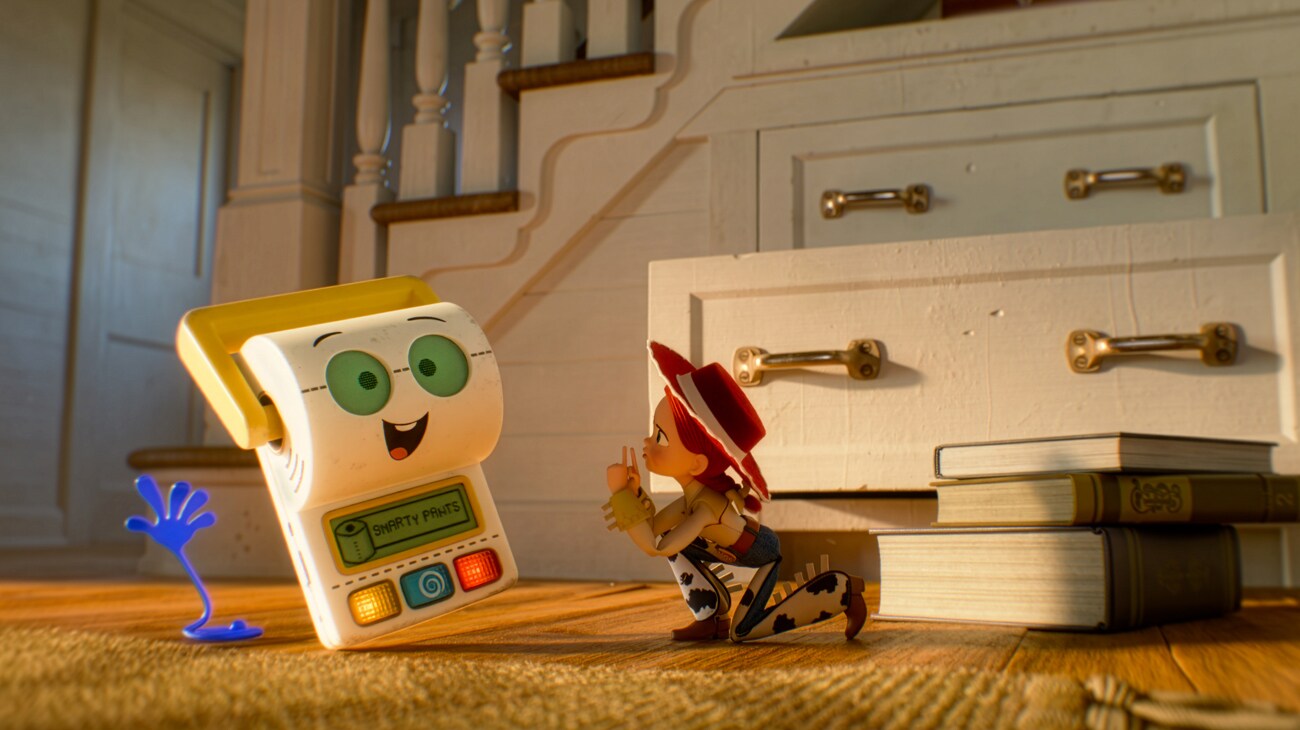
Smarty Pants, voiced by Conan O’Brien, brings an especially unusual personality to the group.
The film’s humour frequently comes from the contrast between how toys understand the world and how humans actually use them.
That idea has been central to Toy Story since the beginning.
Children can enjoy the visual comedy and energetic situations, while adults may appreciate jokes about technology, parenting, and changing habits.
Not every joke will work for every viewer, but the variety helps keep the film entertaining.
8. The Emotional Moments Feel Connected to Real Life
Pixar has built a reputation for making audiences care about characters who aren’t human.
Toy Story 5 continues exploring emotions that are familiar to almost everyone.
Fear of being forgotten, uncertainty about the future, and the desire to remain important to someone are not feelings limited to toys.
They are part of ordinary human relationships.
Jessie’s concerns about Bonnie growing older can also be understood as a reflection of how parents, friends, and family members respond when someone they love changes.
Sometimes, caring about another person means accepting that they no longer need us in exactly the same way.
That idea gives the film emotional depth beyond its adventure storyline.
It also explains why the franchise continues to resonate with adults who first encountered these characters as children.
9. Randy Newman’s Music Preserves the Franchise’s Identity
Music has always played an important role in the emotional identity of Toy Story.
Randy Newman returns to compose the score for the fifth feature film.
His musical style has helped establish the franchise’s mixture of warmth, humour, and nostalgia.
For longtime viewers, familiar musical qualities can create an immediate connection to earlier adventures.
However, the score also needs to support a story about modern technology and changing relationships.
The contrast between traditional toys and digital devices offers interesting opportunities for musical storytelling.
By retaining Newman, Pixar preserves an important part of the series’ creative continuity.
10. Toy Story 5 Introduces Memorable New Characters
Beyond Lilypad, Toy Story 5 expands its world with several new personalities.
Smarty Pants is a technologically enhanced potty-training toy with a mischievous attitude.
Snappy is an enthusiastic toy camera, while Atlas is a talking GPS hippo.
These characters reflect different generations of children’s products.
Some combine familiar toy designs with technology, while others represent the changing ways children interact with objects.
That variety is important because the film’s central theme isn’t simply about old toys being replaced by new ones.
It is about how the definition of a toy continues to evolve.
By introducing characters that occupy the space between traditional playthings and electronic devices, the film gives its world greater variety.
11. The Adventure Still Feels Like Toy Story
Although the central conflict is different, Toy Story 5 retains the franchise’s adventurous spirit.
Ordinary environments become enormous obstacles when viewed from the perspective of small toys.
A child’s bedroom, a household object, or an unfamiliar location can become the setting for an exciting sequence.
The characters must cooperate, improvise, and rely on one another to overcome problems.
These elements have always made Toy Story enjoyable.
The fifth installment continues that tradition while connecting its action to the larger story about friendship and changing priorities.
That balance is important.
A film about screen time could easily become overly serious or instructional.
By keeping the adventure entertaining, Pixar allows its message to emerge through the characters’ experiences rather than relying entirely on speeches.
12. The Film Has Something Meaningful to Say About Technology
One of Toy Story 5’s most interesting qualities is that its central theme is relevant beyond the cinema.
Digital devices have become part of everyday childhood.
They can provide education, entertainment, communication, and opportunities for creativity.
However, families also worry about the amount of time children spend looking at screens.
The film turns that debate into a conflict between characters who believe they are helping the same child.
Its most thoughtful interpretation isn’t that technology must be rejected.
Instead, it asks whether digital convenience should replace every other form of play and connection.
That question gives parents and children something to discuss after watching.
A strong family film doesn’t need to provide a perfect answer to every modern problem.
Sometimes, encouraging a meaningful conversation is enough.
13. It Brings Nostalgia Without Relying Entirely on It
For many adults, Toy Story is closely connected to childhood memories.
The original film arrived in 1995 and introduced a new era of computer-animated filmmaking.
Its characters have remained recognisable for more than three decades.
Seeing Woody and Buzz together again naturally creates nostalgia.
However, nostalgia alone cannot sustain a feature-length movie.
Toy Story 5 works to justify its existence by introducing a conflict that wasn’t central to the earlier films.
The rise of tablets and digital entertainment gives the franchise a reason to revisit its original questions about childhood and belonging.
That helps the sequel feel connected to the past without becoming entirely dependent on familiar references.
14. Critics and Audiences Responded Positively
Toy Story 5 received strong critical and audience reactions following its theatrical release.
Rotten Tomatoes reported positive reviews from a large majority of critics and verified moviegoers.
Reviewers frequently highlighted its animation, humour, character relationships, and timely themes.
Some critics also questioned whether another sequel was necessary or felt that certain story elements were less effective than those in the franchise’s strongest installments.
That combination of praise and criticism is worth acknowledging.
A successful film doesn’t have to be flawless.
What matters is whether its strengths outweigh its weaknesses and whether it gives audiences a satisfying experience.
The response to Toy Story 5 suggests that many viewers found the new adventure worthwhile.
15. It Proves the Toy Story Franchise Can Still Evolve
Perhaps the strongest argument in favour of Toy Story 5 is that it demonstrates how a long-running franchise can respond to a changing world.
The original Toy Story explored jealousy and friendship.
Later installments examined abandonment, growing older, identity, and the meaning of belonging.
The fifth film turns its attention toward the changing nature of childhood in the digital age.
That progression makes sense.
The characters may remain physically unchanged, but the children around them live in a world that keeps evolving.
By acknowledging that reality, Pixar gives the franchise another reason to exist.
Whether future sequels are necessary remains an open question.
But Toy Story 5 shows that familiar characters can still explore new ideas when the filmmakers understand what made them meaningful in the first place.
Is Toy Story 5 Better Than the Previous Movies?
Comparing Toy Story 5 with its predecessors is difficult because each installment explores a different stage of childhood.
The original Toy Story remains historically important for its groundbreaking animation and memorable introduction to Woody and Buzz.
Toy Story 2 expanded the emotional complexity of the characters, while Toy Story 3 delivered one of the franchise’s most memorable stories about growing up.
Toy Story 4 explored Woody’s changing understanding of his own purpose.
Toy Story 5 offers a different perspective by focusing on technology and the evolution of playtime.
It may not replace the earlier films as everyone’s favourite, but its contemporary theme gives it a distinct identity.
Calling it one of the best animated movies of 2026 is a defensible opinion based on its craft, emotional storytelling, and positive reception.
Declaring it unquestionably the greatest Toy Story film would be a much stronger claim that depends on personal taste.
What Are the Weaknesses of Toy Story 5?
Despite its strengths, Toy Story 5 has several limitations worth considering.
The Franchise Has Already Delivered Strong Endings
Both Toy Story 3 and Toy Story 4 provided emotionally satisfying conclusions to important character journeys.
Some viewers may feel that a fifth installment was unnecessary.
The Message About Technology Can Feel Familiar
Concerns about excessive screen time are already common in family entertainment.
The film’s success depends on how creatively it explores those concerns rather than simply repeating them.
Not Every Character Receives Equal Attention
With a large returning cast and several new additions, some familiar toys naturally receive less development than others.
Nostalgia May Influence Audience Expectations
Viewers who grew up with the original trilogy may compare every emotional moment with their memories of earlier films.
That can make it difficult for a new installment to establish its own identity.
Is Toy Story 5 Suitable for Children?
Toy Story 5 is rated PG in the United States for some thematic elements and rude humour.
In Indonesia, the Film Censorship Board classified the movie as suitable for all ages.
The film’s colourful animation, familiar characters, and energetic adventure make it accessible to younger viewers.
However, some emotional themes about being forgotten and growing older may resonate more strongly with older children and adults.
That balance is one of the reasons the Toy Story franchise has remained popular with multiple generations.
Frequently Asked Questions About Toy Story 5
Is Toy Story 5 worth watching?
Yes. Toy Story 5 offers entertaining animation, familiar characters, and a timely story about technology and childhood. It is especially appealing to families and longtime Pixar fans.
What is Toy Story 5 about?
The movie follows Woody, Buzz Lightyear, Jessie, and their friends as they confront Lilypad, a smart tablet that changes the way Bonnie spends her time and challenges the role of traditional toys.
Who directed Toy Story 5?
Andrew Stanton directed Toy Story 5, with Kenna Harris serving as co-director.
Who voices Woody and Buzz Lightyear?
Tom Hanks returns as Woody, while Tim Allen reprises his role as Buzz Lightyear.
Who is the new character Lilypad?
Lilypad is a frog-themed smart tablet voiced by Greta Lee. She introduces new possibilities for Bonnie while challenging the traditional toys’ place in her life.
Is Jessie an important character in Toy Story 5?
Yes. Jessie plays a prominent role as the leader of Bonnie’s toys, and her emotional journey is central to the story.
When was Toy Story 5 released?
Toy Story 5 opened in the United States on June 19, 2026. Indonesia’s Film Censorship Board lists June 17, 2026, as its local theatrical release date.
Do I need to watch the previous Toy Story movies first?
New viewers can understand the central conflict, but watching the earlier films provides more context for the characters’ relationships and emotional histories.
Final Verdict: Why Toy Story 5 Deserves Recognition as One of 2026’s Best Animated Movies
Toy Story 5 (2026) deserves consideration as one of the year’s best animated movies because it combines Pixar’s technical excellence with a story that feels relevant to modern childhood.
Its greatest strength is not simply the return of Woody and Buzz Lightyear.
It is the way the film explores what happens when the world changes faster than familiar characters can understand.
Jessie’s expanded role provides a refreshing perspective, while Lilypad introduces a conflict that reflects real conversations about technology, imagination, and growing up.
The animation remains impressive, the humour is accessible to different generations, and the emotional themes continue the franchise’s tradition of finding human experiences in the lives of toys.
There are legitimate reasons to question whether a fifth Toy Story movie was necessary.
Some viewers may still prefer the emotional conclusions offered by earlier installments.
However, Toy Story 5 demonstrates that a sequel can be worthwhile when it introduces an idea that connects familiar characters to a changing world.
For families, longtime Pixar fans, and viewers who appreciate animation with meaningful themes, Toy Story 5 offers more than a nostalgic return.
It reminds audiences that while the way children play may change, friendship, imagination, and the desire to feel connected remain important.
And that is why Toy Story continues to matter after more than thirty years.




0 Comments
Share your perspective on this story. Keep the conversation thoughtful and respectful.